West Des Moines doesn't have one housing market. It has at least three, stitched together under a single city limit sign, and the median price you see in a market report only tells you something useful once you know which of the three you're actually shopping in. A buyer comparing a bungalow near Historic Valley Junction to a new build off Grand Prairie Parkway isn't comparing two houses in the same market. They're comparing two different cities that happen to share a zip code, a park system, and a mayor.
That distinction matters more than it sounds, because it changes what you should budget for beyond the purchase price. The corridor you land in determines the age of the pipes under your yard, whether you're negotiating an HOA fee or a sewer scope, and whether the number you saw on a portal six weeks ago still means anything today.
The Median Everyone Quotes
Look up West Des Moines home prices and you'll land on a single figure. In the three-month window ending in the spring of 2026, the city's median sale price sat around $328,000, up 4.8 percent from the same stretch a year earlier, with homes moving at roughly $219 per square foot and typically taking about five weeks to sell. Zoom out to the full Des Moines-West Des Moines metro area and the Federal Reserve Bank of St. Louis put the median listing price at $349,950 as of July 2026.
Neither number tells you much on its own. A citywide median is an average of very different homes: a century-old bungalow two blocks from a farmers market, a mid-century ranch off a road platted in the 1970s, and a five-bedroom new build with a three-car garage and a homeowners association. Averaging those together produces a number nobody's actual house matches.
Three Corridors, One City
The useful way to think about West Des Moines is by corridor, not by citywide average. Each one has its own price band, its own housing stock, and its own maintenance profile.
| Corridor | Typical home age | Price range | What defines it |
|---|---|---|---|
| Historic Valley Junction | 100+ years | roughly $250,000 to $500,000 | Walkable historic core, smaller lots, original systems common |
| Ashworth Road corridor | Mid-century to early 2000s | roughly $300,000 to $600,000 | Established trees, mixed vintage, steady resale demand |
| Jordan Creek / Glen Oaks growth corridor | New construction | roughly $350,000 to $800,000+, Glen Oaks often above $1M | Planned communities, larger lots, HOA structures |
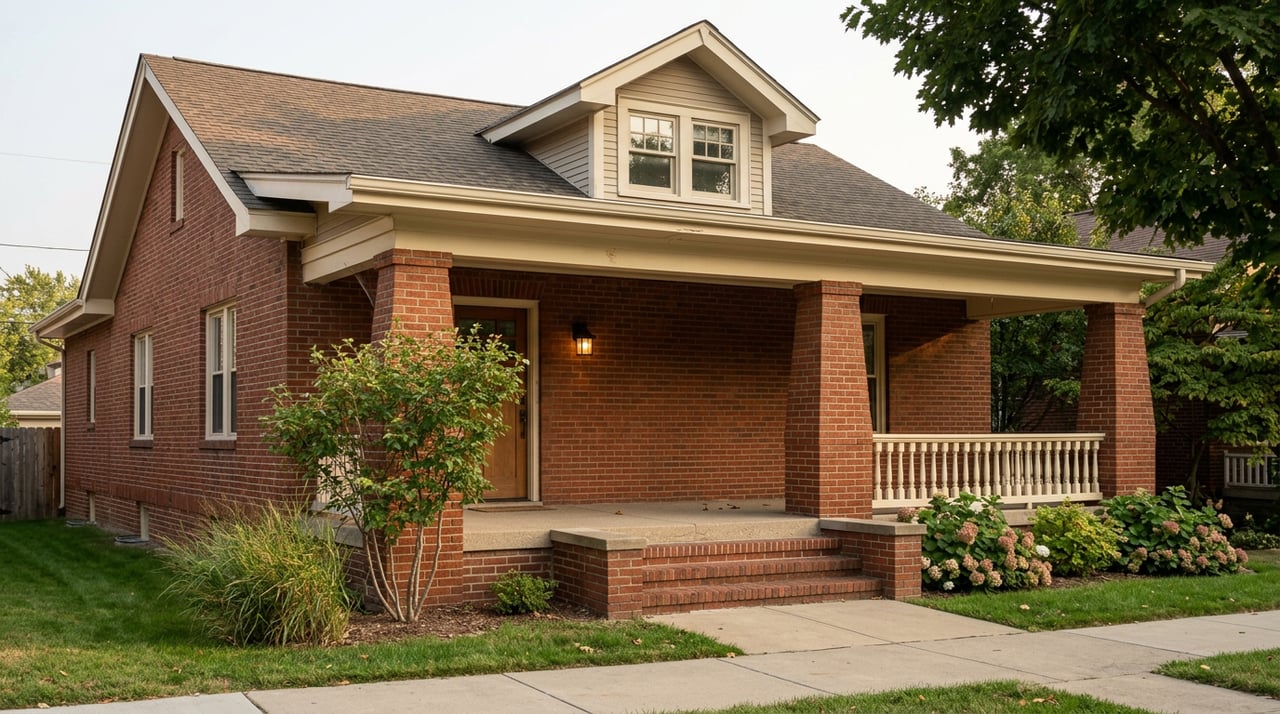
Historic Valley Junction is the oldest and most distinct of the three. Its commercial core is a designated National Historic District, and as of 2025 the city counted 53 contributing historic properties within that district alone. The residential blocks surrounding it carry that same character: quaint, historic homes, many of them over 100 years old, on walkable streets with smaller footprints. Buyers here often trade square footage for architectural personality, which is exactly why the price band runs lower than the citywide median even though the per-square-foot cost can land close to it. You're not necessarily buying cheaper space. You're buying less of it, older.
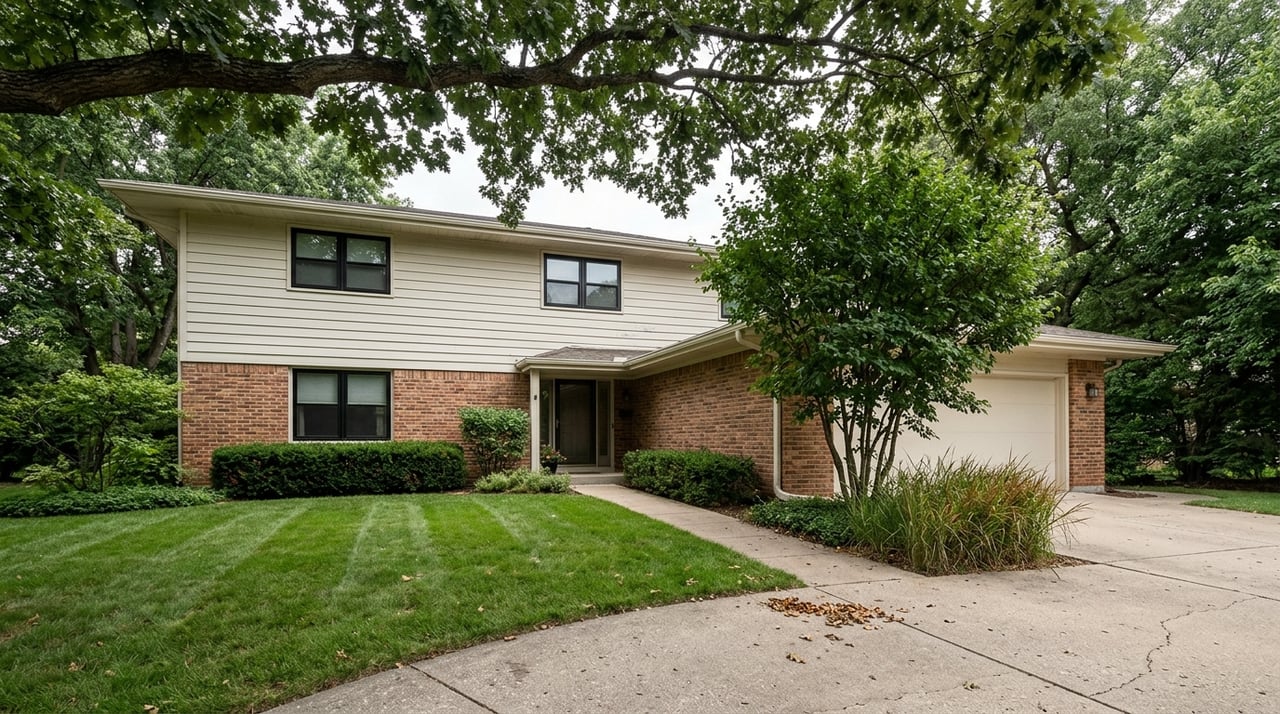
The Ashworth Road corridor sits in the middle, literally and financially. This is where a lot of West Des Moines' mid-century housing lives, alongside infill built through the early 2000s, under mature tree canopy that took fifty years to grow. It's the corridor that behaves most like the citywide median because it's the closest thing to an average home in an average year.
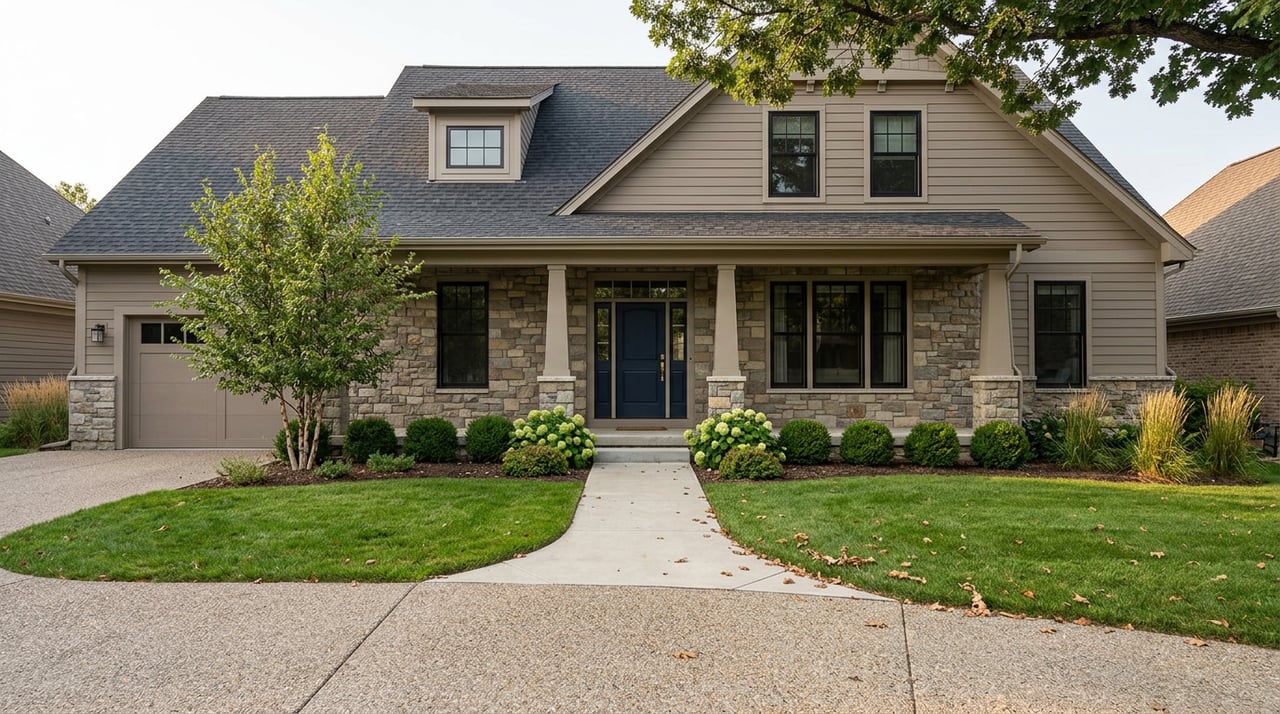
Then there's the growth corridor stretching toward Jordan Creek Town Center, Mills Civic Parkway, and Grand Prairie Parkway, where planned communities like Reed's Crossing, Wistful Vista, Della Vita, and Mill Ridge sit alongside the gated golf enclave of Glen Oaks. Maple Grove, on the fast-growing edge of that same corridor, offers the most accessible entry point into West Des Moines schools and city services, with townhomes starting in the low $300,000s and detached single-family homes running $400,000 to $500,000. West Glen fills a similar niche for attached housing closer to shopping and dining. This is new-build territory, and the price premium buys you modern systems and a homeowners association, not character.
The Pipe Nobody Puts on the Listing Sheet
Here's the part that doesn't show up in a portal search but shows up fast in a home inspection: the corridor you're shopping in determines what's actually running through the walls and under the yard.
Homes in the older sections near Valley Junction and along Vine Street commonly still carry original galvanized steel or cast-iron supply lines that have exceeded their functional lifespan, which shows up as reduced water pressure and discolored water long before anyone calls a plumber about it. The same mature tree canopy that makes those blocks so pleasant to walk through sends roots looking for water, and older sewer laterals are exactly what those roots find. Newer developments farther west, closer to Jordan Creek and Westown, are typically built with PVC and PEX, so this specific risk mostly doesn't exist there. It's replaced by a different kind of due diligence: reading the HOA covenants and understanding what the monthly or annual fee actually covers.
The lateral sewer line matters because of who's responsible for it. The pipe carrying wastewater from the house to the city main belongs to the homeowner, not the city, for its entire length until it reaches that connection point. A sewer scope is a camera run through that line to check for the cracks, offsets, and root intrusion that a standard walkthrough inspection can't see, and it's a service worth adding for a home with an unknown sewer line age, mature trees nearby, or drains that run slow. One Des Moines-area pricing guide put the cost of that add-on scope around $180 to $220, a small number compared to what a collapsed lateral costs to replace. A standard general home inspection across the Des Moines metro typically runs $400 to $800 depending on the size of the home, and the sewer scope sits on top of that as a line item, not a substitute for it.
What This Changes About How You Shop
If you're comparing homes across corridors, the citywide median is close to useless as a planning number. What matters is comparing a home's price to other recent sales in its own corridor, not to the blended city average, and building in the right kind of due diligence for where that home sits.
For a Valley Junction-area listing, that means asking directly about the age and material of the sewer lateral and the water supply line before you're deep into a thirty-day close, and budgeting for a sewer scope as a matter of course rather than an afterthought. For an Ashworth Road corridor home, it means treating it like any mid-century or early-2000s purchase anywhere in the metro: age-appropriate systems checks, nothing exotic. For a Jordan Creek-corridor or Glen Oaks purchase, the diligence shifts almost entirely to paperwork: read the HOA declaration before you write an offer, not after, since fee structures and rules vary meaningfully between planned communities even within the same corridor.
None of this shows up in a search filter set to a price range. It shows up when you actually walk the blocks and ask the right questions about what's underneath them.
A Few Straight Answers
Does every home in West Des Moines need a sewer scope before closing? No. It's most relevant for older homes with mature trees nearby, an unknown sewer line age, or any history of slow drains, which describes a lot of the Valley Junction and Vine Street area. New-corridor homes built with modern PVC or PEX plumbing generally don't carry the same risk.
If a sewer scope finds a problem, who pays for it? That's a negotiation, not an automatic outcome. Since the lateral line becomes the homeowner's responsibility the moment you close, most buyers who find a real issue during the inspection period use it to request a repair credit or a price adjustment rather than walking away outright, assuming the rest of the home checks out.
Is the Ashworth Road corridor just a compromise between the other two? Not exactly. It's genuinely its own thing: mid-century and early-2000s construction under established tree cover, priced in the middle, without the specific plumbing-age risk that concentrates in the oldest blocks near Valley Junction and without the HOA structures that come with new construction farther west.
The number on the portal is a starting point, not a strategy. Figuring out which of these three West Des Moines markets actually fits your budget, your risk tolerance, and your patience for older-home maintenance is the part that takes a local eye.
If you're trying to figure out which corridor makes sense for your situation, Dan Rozga can walk you through the comps that actually apply to your search instead of the citywide blend. Let's Connect.